

Combining Beauty and Function Through the Art of Layering
Table of Contents Show
Layered window treatments are where design truly begins to feel thoughtful and complete.
If a single treatment solves one need — privacy, light control, softness — layering solves several at once. It allows you to blend beauty with performance, softness with structure, and personality with practicality.
For homeowners who already know they want custom treatments, layering is often the step that transforms “finished” into elevated.
How to Layer Successfully
Purpose of Layering
Layering serves two essential purposes: aesthetic and functional.
Aesthetically, it creates:
Depth and dimension
Contrast between materials
Architectural emphasis
A collected, curated feel
Functionally, it allows for:
Precise light control
Enhanced privacy
Energy efficiency
Flexibility throughout the day
For example, a woven wood shade might soften sunlight beautifully, while adding drapery panels introduces insulation, drama, and nighttime privacy.
When done well, layering feels intentional rather than excessive.
Steps of Layering
Start with Function
Ask: What does this window need?
Full blackout?
Filtered light?
Daytime privacy?
UV protection?
Function determines your foundational layer.
Choose a Base Treatment
This is typically a shade or shutter: something mounted close to the glass that handles light and privacy.
Add a Softening Layer
Drapery panels, valances, or cornices bring warmth, proportion, and polish.
Balance Scale and Proportion
Layering should enhance the window’s architecture, not overwhelm it. Proper mounting height, panel width, and projection matter.
Coordinate Textures Thoughtfully
Contrast smooth with textured, structured with soft, tailored with organic.
Layering isn’t about adding more, but rather it’s about adding purpose.
Powerful Layered Combinations
These are some of the most effective and timeless combinations we recommend and design for our clients.
Drapes + Roman Shades
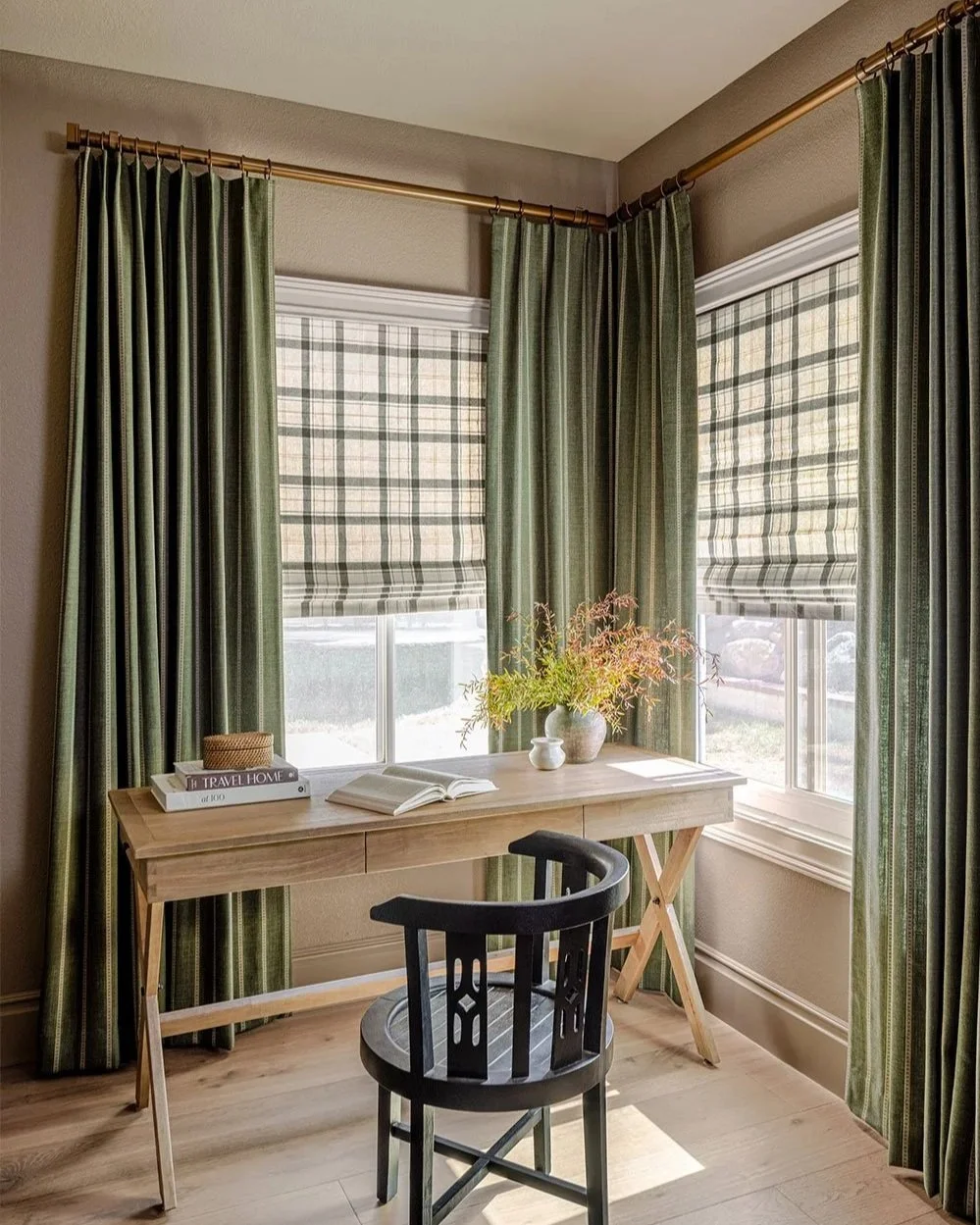
This pairing offers softness on softness, with structure beneath.
Why it works:
Romans provide tailored light control.
Drapes add height and architectural presence.
Together, they create fullness and depth.
Ideal for living rooms, dining rooms, and primary bedrooms.
Drapes + Woven Wood Shades
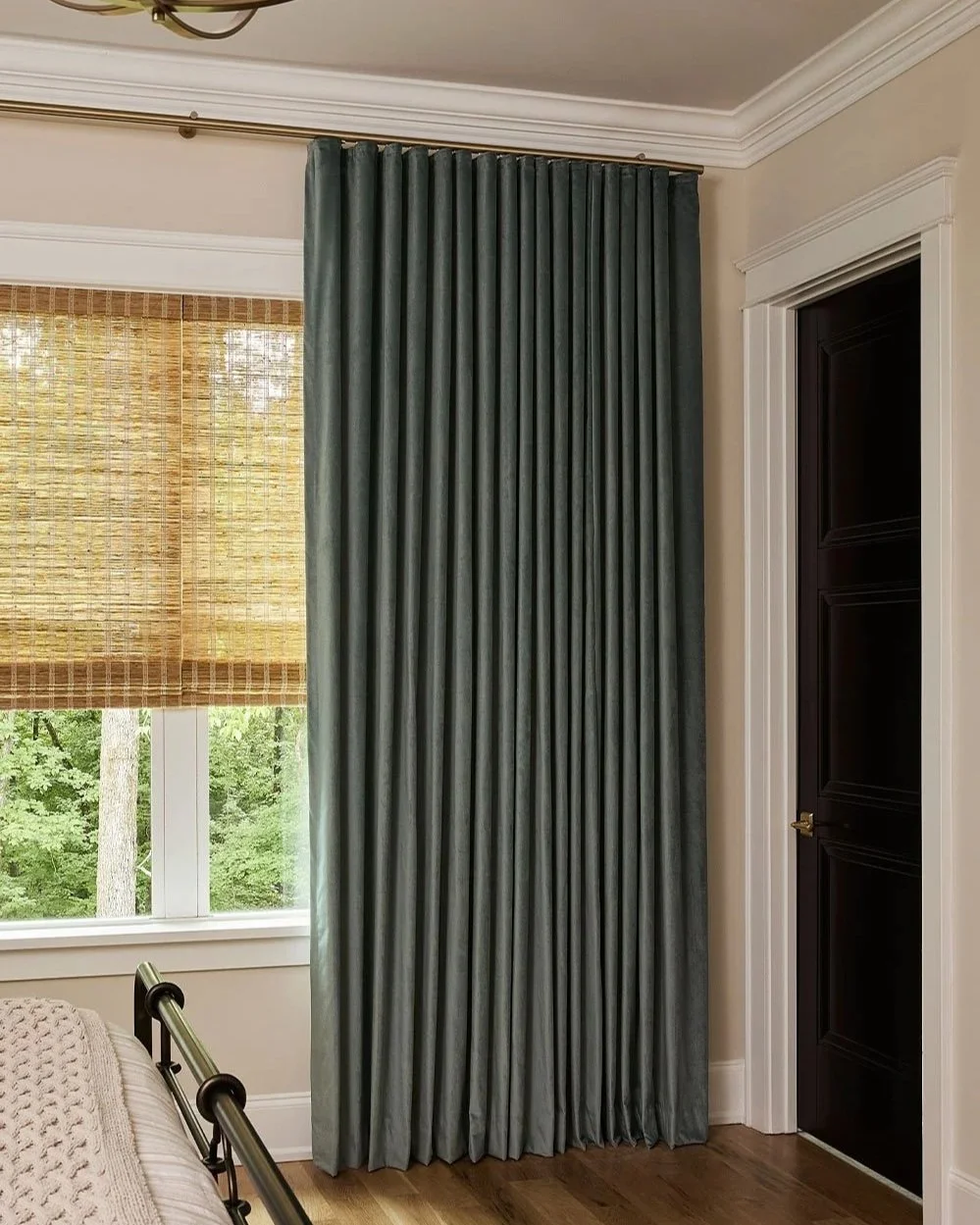
Texture meets softness in this layered favorite.
Why it works:
Woven woods bring warmth and organic texture.
Drapes soften edges and improve insulation.
The contrast between structured fibers and flowing fabric feels collected and refined.
Perfect for family rooms and relaxed interiors.
Drapes + Roller Shades
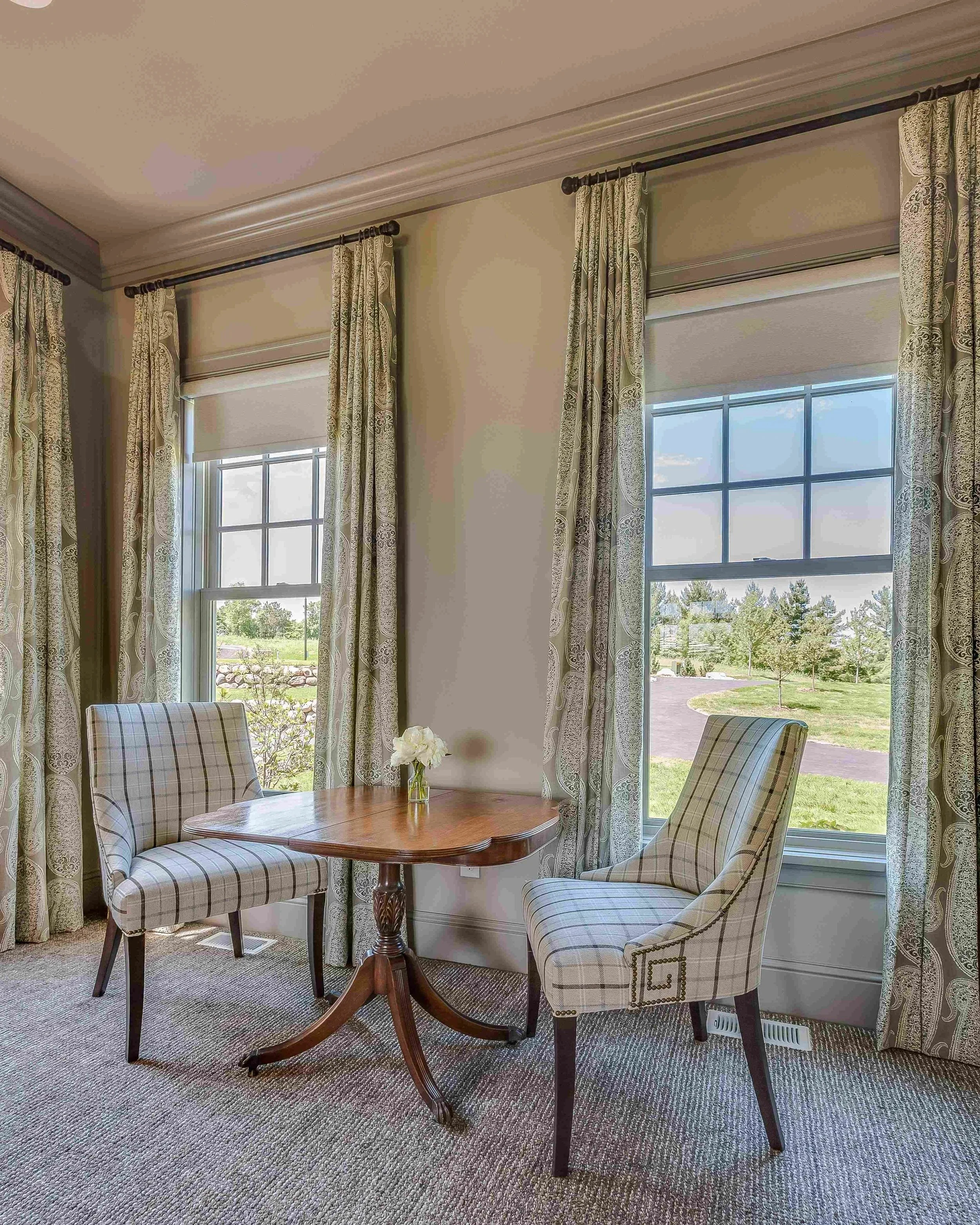
Clean and practical beneath tailored panels.
Why it works:
Roller shades offer streamlined function.
Drapes add softness and dimension.
Blackout or solar rollers handle light precisely.
An excellent solution for contemporary homes or media rooms.
Drapes + Sheers
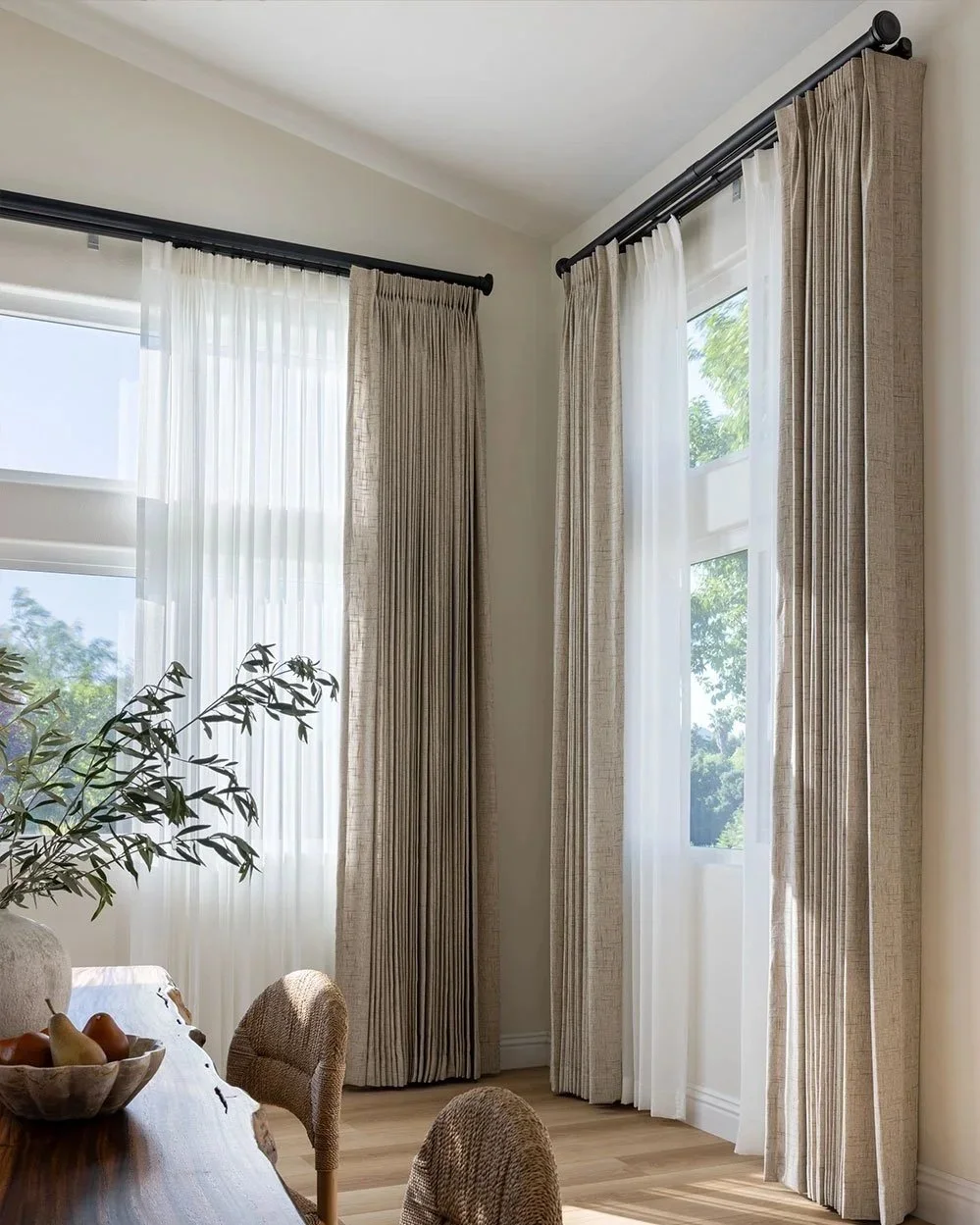
Classic and versatile.
Why it works:
Sheers filter daytime light.
Drapes close fully for privacy and drama.
The look feels luxurious yet functional.
This combination adapts beautifully to formal and casual spaces alike.
Valance + Shutters
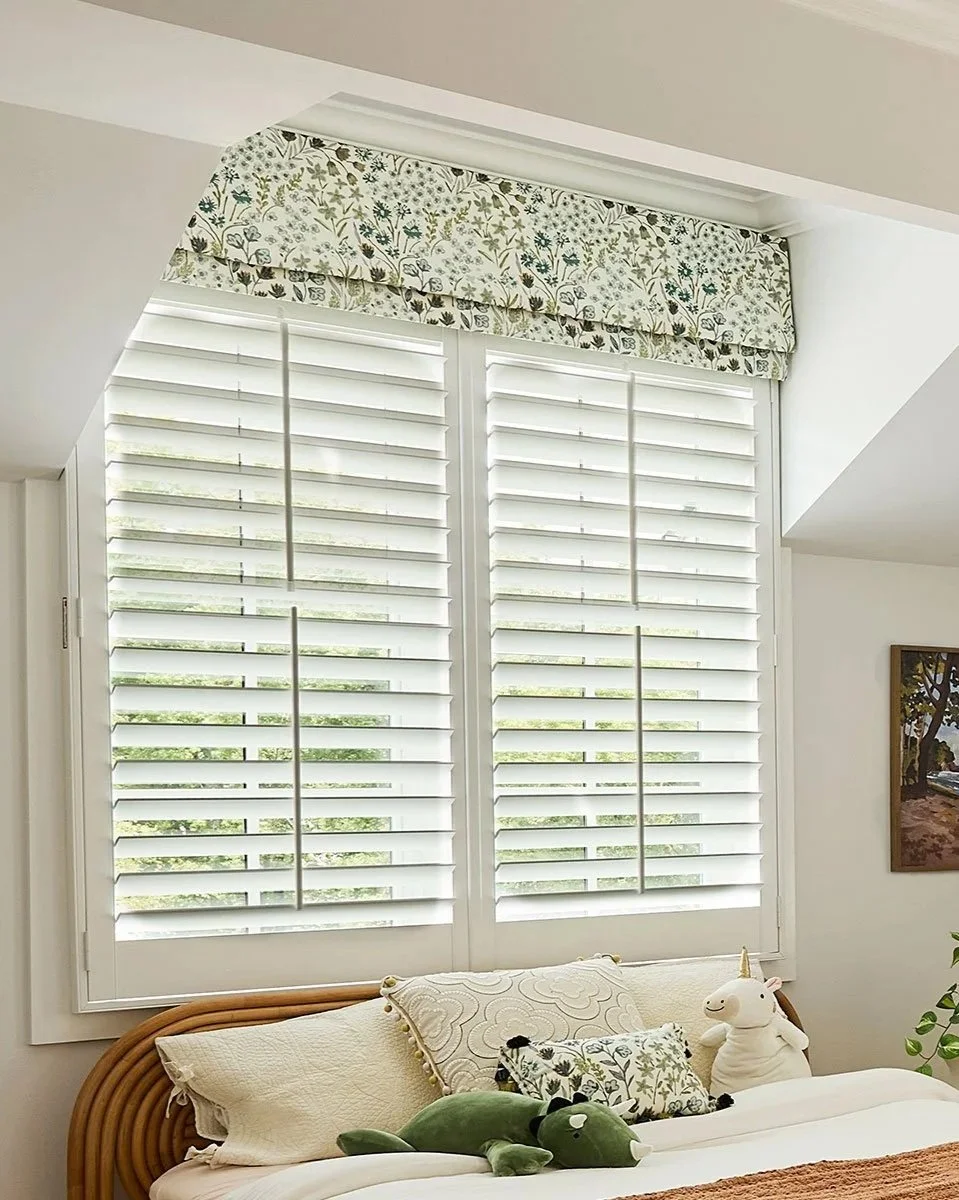
Structure meets softness.
Why it works:
Shutters provide durability and architectural presence.
A valance softens their lines and adds color or pattern.
The result feels balanced and intentional.
Great for traditional or transitional homes.
Cornice + Drapes
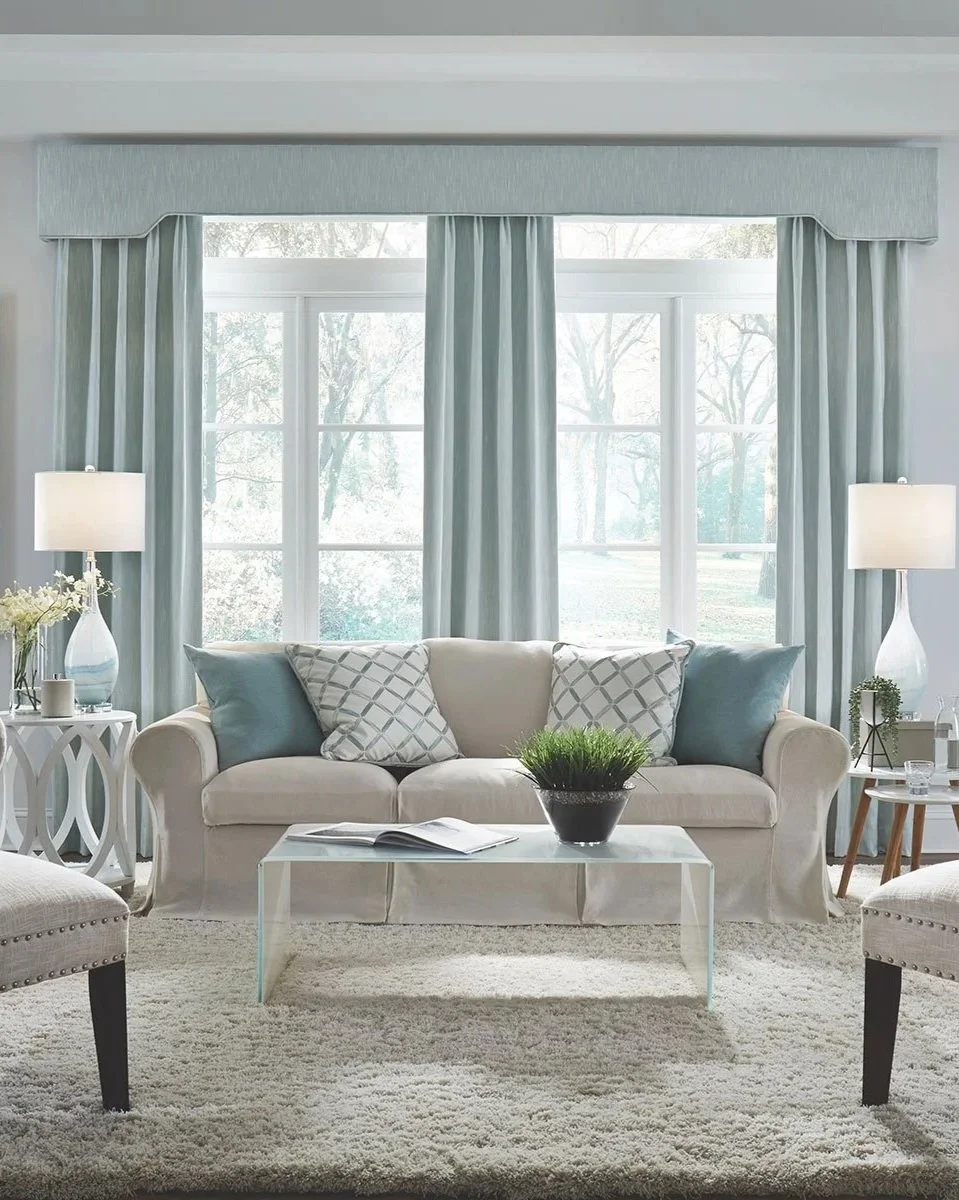
Architectural drama at its finest.
Why it works:
The cornice creates a crisp, structured crown.
Drapes add vertical movement and softness.
This pairing frames the window beautifully and hides hardware completely.
Light control
A polished backdrop behind drapery panels
Layering window treatments is less about adding more and more about designing smarter.
When each layer serves a purpose — whether filtering light, enhancing privacy, adding insulation, or elevating the aesthetic — the result feels harmonious rather than heavy.
The most beautiful layered windows don’t feel complicated. They feel complete.
And when thoughtfully designed, they become one of the most powerful design elements in the entire room.
