

Selecting Your First Layer: Hard Window Treatments 101
Table of Contents Show
When designing a polished, functional room, window treatments are crucial. The first layer - hard window treatments - serves as the foundation, allowing you to prioritize light control, privacy, or energy efficiency. Choosing the right hard window treatment can dramatically improve both the look and performance of your space.
From shutters and blinds to roller and cellular shades, every option offers unique benefits. This guide walks you through the most popular types of hard window treatments, helping you choose the best solution for your home.
Shutters
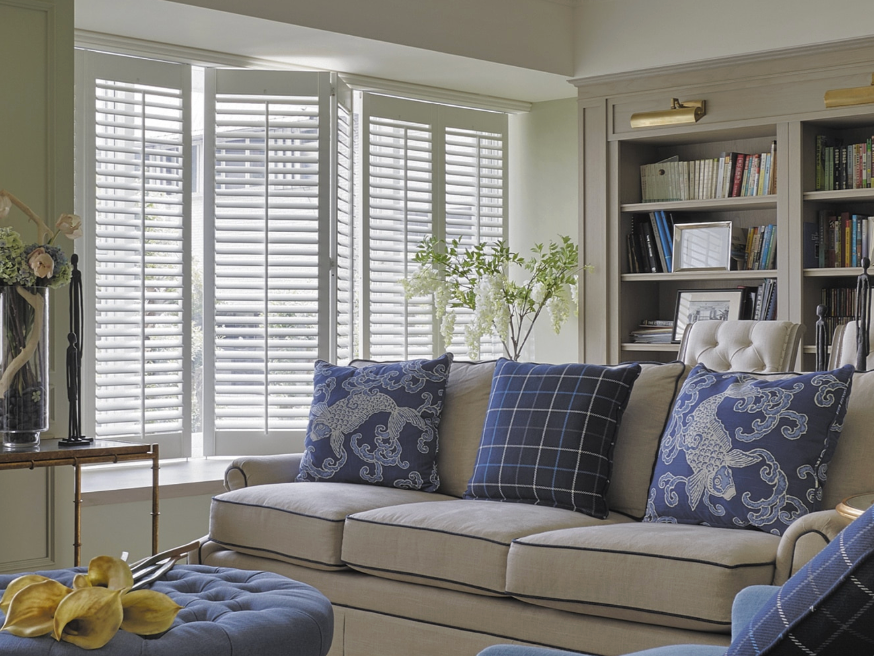
What are Shutters?
Interior shutters are a timeless window treatment featuring solid frames with adjustable louvers, allowing for light and privacy control. Often made from wood or composite materials, shutters are permanently installed and add a high-end, custom look to any room.
Key Features of Shutters
Light control and privacy
Durable and long-lasting construction
Increased home value and consistent curb appeal
Easy to clean and maintain
Wide variety of stylistic options
Best Locations
Shutters are ideal for:
Living and dining rooms
Street-facing spaces
Homes with classic or transitional design styles
Spaces that require durable and resilient treatments.
Roller Shades
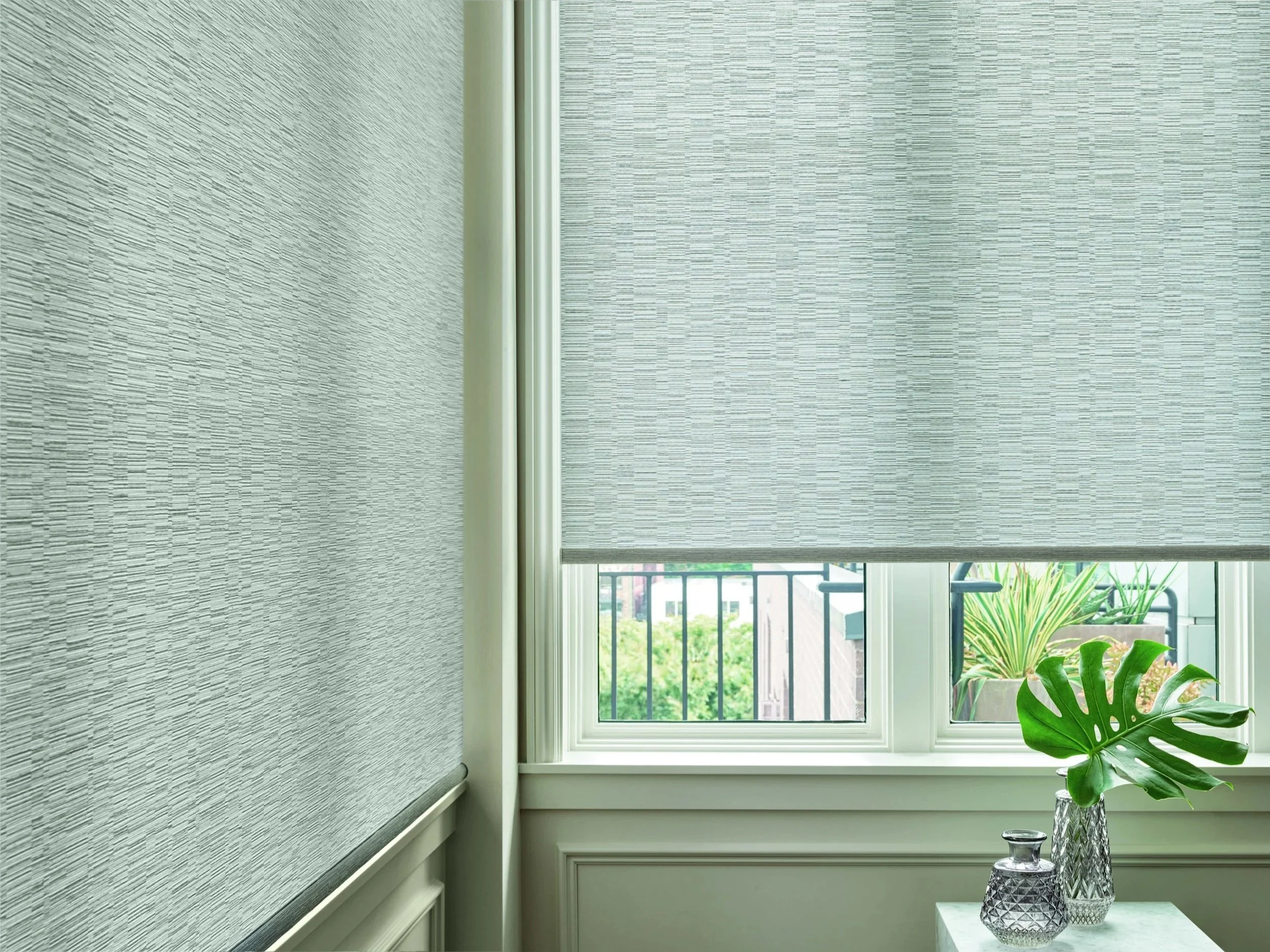
What are Roller Shades?
Roller shades are a sleek, modern window covering made from a single piece of fabric that rolls up into a compact headrail. They are one of the most versatile and minimalist shade options.
Key Features
Clean, contemporary appearance
Smooth, easy operation (manual or motorized options)
Budget-friendly
Wide range of light control options, ranging by opacity percentage
Best Locations
Roller shades work best in:
Bedrooms
Offices
Kitchens and bathrooms requiring moisture-resistant materials
Solar Shades
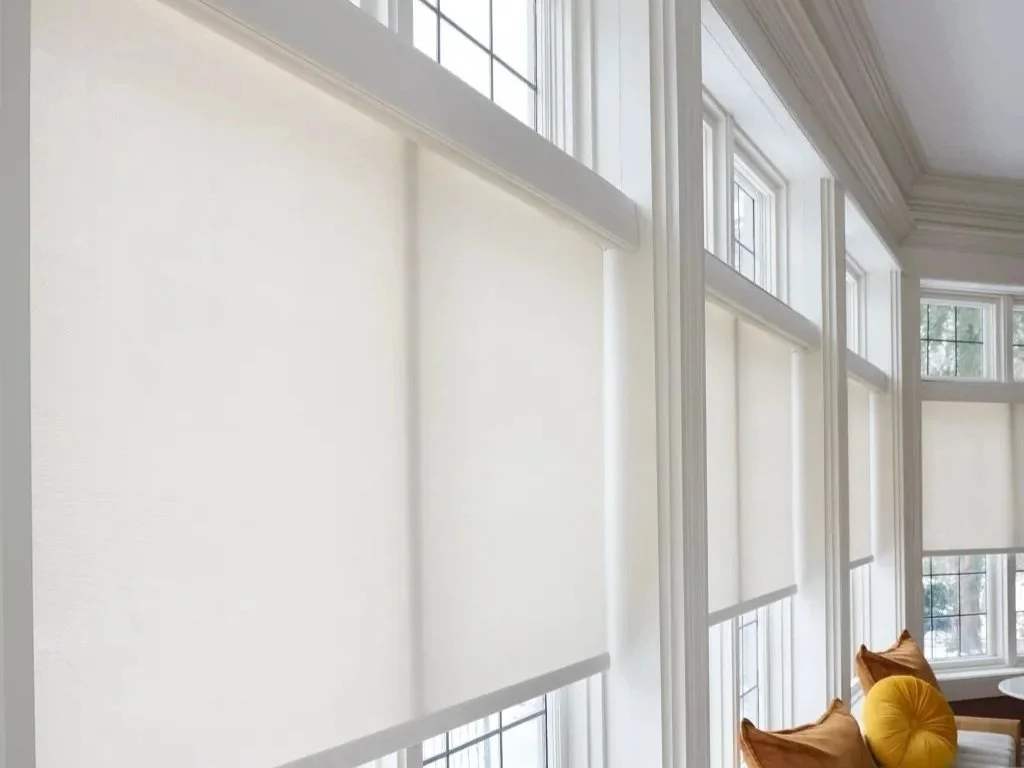
What are Solar Shades?
Solar shades are coverings designed to reduce glare and block harmful UV rays, all while preserving your view. Made from specialized screen fabrics, solar shades filter light without completely darkening a room.
Key Features
Blocks harmful UV rays while maintaining visibility
Reduces heat and improves energy efficiency
Wide range of light control options, ranging by opacity percentage
Modern, streamlined look
Best Locations
Solar shades are perfect for:
Living rooms with large windows
Sunrooms and patios
Offices with screens, monitors, and other electronics
Spaces where natural light control is essential
Cellular Shades

What are Cellular Shades?
Also commonly referred to as honeycomb shades, cellular shades feature a unique structure that trips air in pockets, providing superior insulation, making them a top choice for energy-conscious homeowners.
Key Features
Excellent energy-efficient properties
Regulation of indoor temperature year-round
Available in light-filtering and blackout options
Acoustic properties
Best Locations
Cellular shades work well in:
Bedrooms and nurseries
Homes in extreme climates
Windows requiring insulation and privacy
Households desiring energy-conscious products
Woven Woods Shades
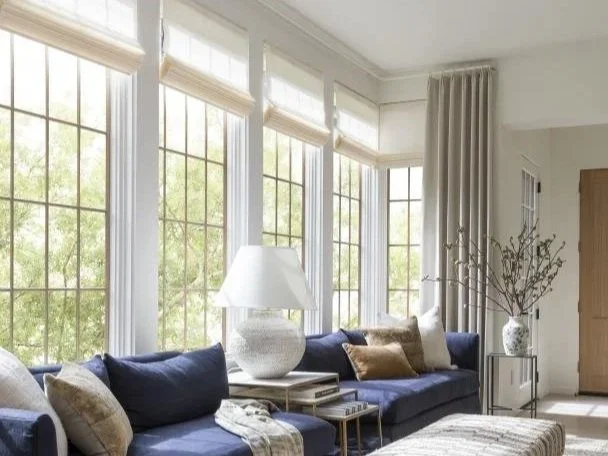
What are Woven Wood Shades?
Woven wood shades are crafted from natural materials such as bamboo, grasses, and reeds. These materials bring texture, warmth, and an organic feel to interiors.
Key Features
Natural, eco-friendly materials for unique appearance
Provides depth and textural interest to a space
Light-filtering with optional liners for privacy or blackout properties
Pairs nicely with additional layers, such as drapery panels and top treatments
Best Locations
Woven wood shades are best for:
Living rooms and bedrooms
Sunrooms
Coastal or organic designs
Spaces needing warmth and softness
Blinds
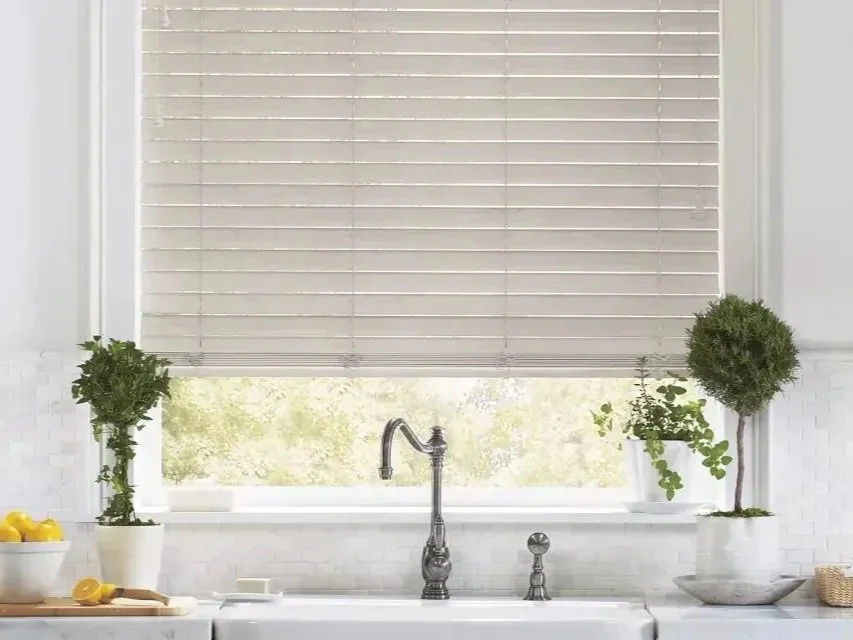
What are Blinds?
Window blinds feature horizontal or vertical slats that tilt to control light and privacy. Blinds are available in materials like wood, faux wood, aluminum, and vinyl, making blinds a classic and highly functional choice.
Key Features
Adjustable slats for precise light control
Wide variety of materials and price points
Easy maintenance and durability
Suitable for high traffic spaces, both residential or commercial
Best Locations
Blinds are great for:
Kitchens and bathrooms (faux wood)
Bedrooms
Entertainment spaces
Home offices
Selecting the best hard window treatment depends on your priorities - whether that's privacy, light control, energy efficiency, or style.
By starting with the right foundational layer, you can build a complete window design that enhances both function and beauty. Pair your hard window treatments with custom drapery or other soft window treatments for a finished, designer look that elevates your entire space.
Not sure which option is right for your space? Let our design team help you find the perfect fit—get personalized recommendations today. Book a Discovery Call today!
-
Hard window treatments are structured window coverings made from durable materials, such as wood, faux wood, vinyl, or engineered fabrics. Unlike soft treatments (drapes, Roman shades, etc.) they serve as the functional foundation of your window, providing essential benefits such as light control, privacy, insulation, and UV protection.
-
The main difference comes down to structure and operation. Shutters are fixed, solid window coverings with adjustable louvers that tilt to control light and privacy. Blinds feature horizontal or vertical slats that can tilt open or closed. Shades are made from continuous fabric panels that raise and lower, but don't have slats. Each option offers different levels of light control, style, and insulation, making them suitable for different rooms and design goals.
-
The best window treatment for privacy is dependent on how much control you want, where shutters offer the highest level of adjustable privacy and cellular shades provide excellent privacy but only when fully lowered. Blinds are a great middle, allowing you to angle slats for partial privacy, or operate and stack the slats for more light.
-
Cellular shades (honeycomb shades) are widely considered the most energy-efficient window treatment. Their unique structure traps air in pockets, creating insulation that helps regulate indoor temperatures year-round. Solar shades also contribute to energy efficiency by reducing heat gain and blocking harmful UV rays. Choosing energy-efficient window treatments can help improve comfort and may even reduce heating and cooling costs.
-
Blind and roller shades are typically the most budget-friendly window treatment options. Blinds offer versatility and durability at a lower price point, while roller shades provide a sleek look without a high cost. These are great choices for homeowners looking for affordable window treatments, without sacrificing functionality.
